Case Studies

Real, measurable results.
Not impressions. Installs.

We don't report on leads or clicks. We report on the numbers your CFO actually checks — lead-to-appointment ratio, cost per install, speed to first contact. Below is the AI Conversion Engine in production: Voice AI, SMS and an AI chatbot, all trained on the client's knowledge base, booking confirmed appointments on their calendar. Priced per confirmed appointment by industry, from $95 + GST.

88%Solar Hub lead-to-appointment (from 44%)
3.8×Qualified pipeline growth
−41%Cost per install
< 1 minSpeed to first contact
Flagship case study

Solar Hub NZ — 44% to 88% lead-to-appointment in 9 months.

The story of what happens when leads get a call in under a minute instead of the next day.

Solar · Voice AI + SMS + chatbot + custom CRM workspace

One ad spend. Every lead worked. Twice the appointments.

The problem. Solar Hub was buying generic "solar leads" from a generalist agency optimising for raw volume. Callbacks took 24+ hours, by which point most enquiries had gone cold or booked with a competitor who called first. The sales team burned hours chasing tyre-kickers, and leadership could see clicks — but never which campaigns produced installs. Conversion was a coin flip.

What we built. We replaced the funnel with the AI Conversion Engine, trained end-to-end on Solar Hub's own knowledge base — their three package tiers (12 / 16 / 22 panel), pricing, service area and objection playbook:

  • Voice AI in under 60 seconds. The moment a lead submits the form, the voice agent calls — verifying home ownership, roof type, budget band and install timeline against the signed-off thresholds, then booking the in-home consultation.
  • SMS fallback. No answer? A conversational SMS picks up the same thread in seconds, handles questions and carries the calendar link through to a booking.
  • AI chatbot. On the website and Messenger, the same brain answers product questions and books appointments around the clock.
  • Custom CRM workspace. Every call recorded, transcribed and logged; every booking dropped onto the team's calendar; every campaign measured against installs, not impressions.

The outcome. Because qualification now happens before a human ever picks up the phone, the lead-to-appointment ratio doubled from 44% to 88%. Qualified pipeline grew 3.8× over nine months, and cost per install fell 41% as converted-lead data was fed back to sharpen the ad audience. Speed to first contact dropped from 24+ hours to under a minute.

Today the Solar Hub team runs their entire sales day off the dashboard we built. They don't chase leads — the AI does, and they walk into appointments that are already qualified.

See the solar setup Read: the Voice + SMS + chatbot stack
44→88%
Lead-to-appointment ratio
3.8×
Qualified pipeline growth
−41%
Cost per install
<1 min
Speed to first contact (was 24+ hrs)
Case study · CRM & AI build

From lead generation to their own advice platform, in six weeks.

What happens when a client stops wanting leads and starts wanting the system that runs their practice.

Insurance & mortgage advisory · Custom CRM + SOA generator + Voice AI

One platform instead of a stack of subscriptions.

The problem. A New Zealand insurance and mortgage advisory firm came to us for lead generation. It worked, and that surfaced the real bottleneck: the practice behind the leads. Client data lived in one platform, the pipeline in another, and the statement of advice was assembled by hand from a fact-find someone had already typed once. Every new adviser meant another seat, on every subscription. Growth made the tooling more expensive and more fragmented at the same time.

What we built. Rather than bolt another tool on, we built them a single platform around how they actually advise:

  • A custom CRM with their pipeline stages, not a generic sales funnel bent to fit advice work.
  • Client and adviser portals so the fact-find is captured once, by the client, straight into the record.
  • A statement of advice generator wired to that record, so the SOA is drafted from data the adviser has already collected instead of being rebuilt by hand.
  • Voice AI and SMS built in, so new enquiries are called and booked inside the same system that runs the rest of the practice.

The outcome. Six weeks from scope to a working platform. The firm went from stitching together separate tools to running intake, pipeline, advice documents and follow-up in one place, on a flat licence rather than a per-adviser cost that climbs with every hire.

The point of this one is not the software. It is that the same team that generated their leads could also build the system that handles them, so nothing had to be handed between suppliers.

See CRM & AI builds Talk about a build
6 wks
Scope to working platform
1
System replacing a stack of tools
Flat
Licence, not per adviser
SOA
Generated from the client record
Case studies · Web design & build

Websites built to convert, not just to sit there.

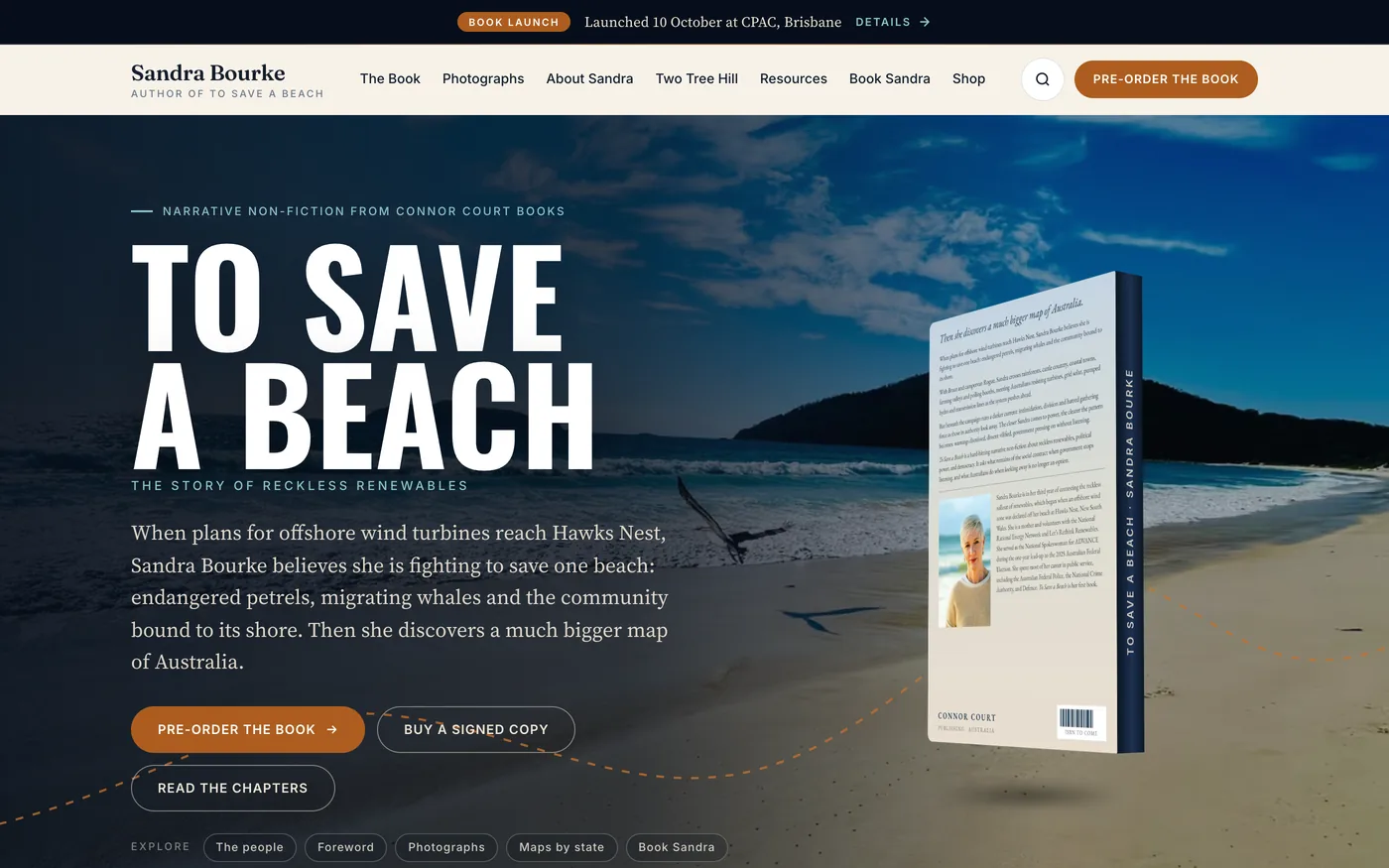
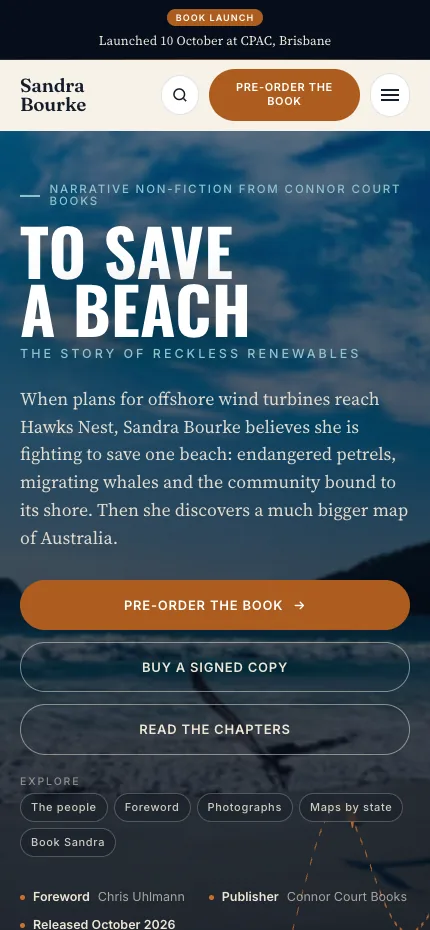
Seven live sites we designed, built and deployed end to end — solar, property development, outsourcing, recruitment, trades and insurance, across three countries. Different industries, one principle: the site has to do the part of the selling that happens before anyone picks up the phone.

solarhub.co.nz
Solar Hub NZ homepage, showing the hero and the instant solar savings estimator
Solar Hub NZ homepage on mobile
Solar · New Zealand · Design, build, deploy

Solar Hub NZ

The brief. Solar is a considered purchase with a long sales cycle, and the single question every homeowner arrives with is "what would this actually save me?" Most solar sites answer it with a contact form. We wanted the site to answer it in about five seconds, on the first screen, without anyone having to give up their phone number first.

What we built. An instant savings estimator sits in the hero. Move a slider to your monthly power bill, pick your region, toggle a battery in or out, and the page returns an indicative annual saving straight away. That single interaction turns a passive visitor into someone who has told us their bill, their region and their battery intent — before any form appears.

  • Estimator first, form second. The calculator gives a real answer up front, then offers the full estimate or a 15-minute call.
  • Trust surfaced immediately. NZ-owned, SEANZ Authorised Provider and Clean Energy Council Approved sit above the headline, not buried on an About page.
  • A system builder for buyers who want to configure panels and batteries themselves rather than be sold to.
  • Finance handled honestly, with the interest-free offer stated plainly at the top of the page.

Figures on the page are deliberately indicative bands rather than fixed quotes, because a real solar price depends on the roof, the usage and the retailer. The site says so, in plain English, right under the number.

Instant savings estimator System configurator Finance calculator CRM-integrated forms Mobile-first
Visit solarhub.co.nz See their lead-gen results
solarhubfiji.com
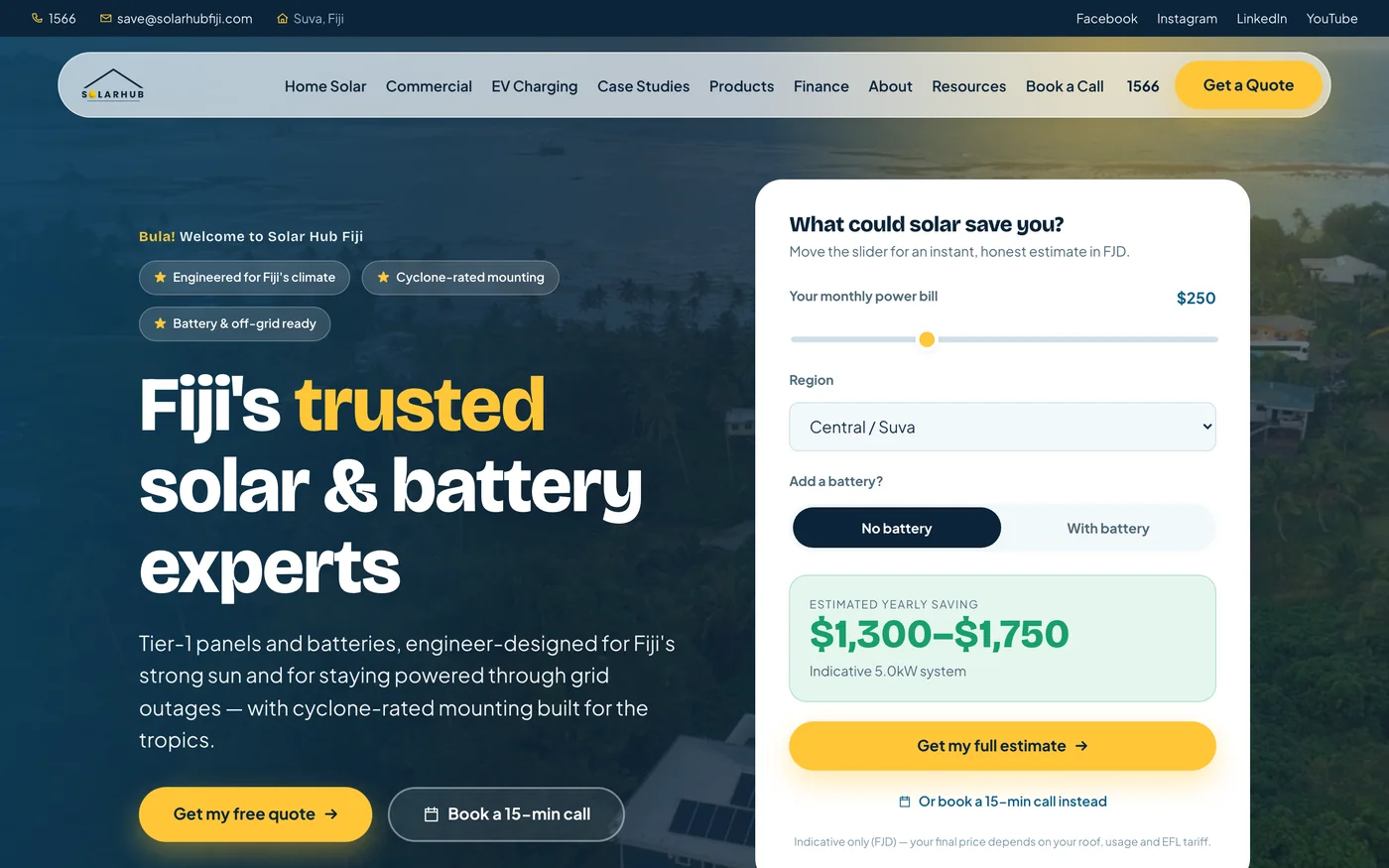
Solar Hub Fiji homepage, showing the hero and the savings estimator in Fijian dollars
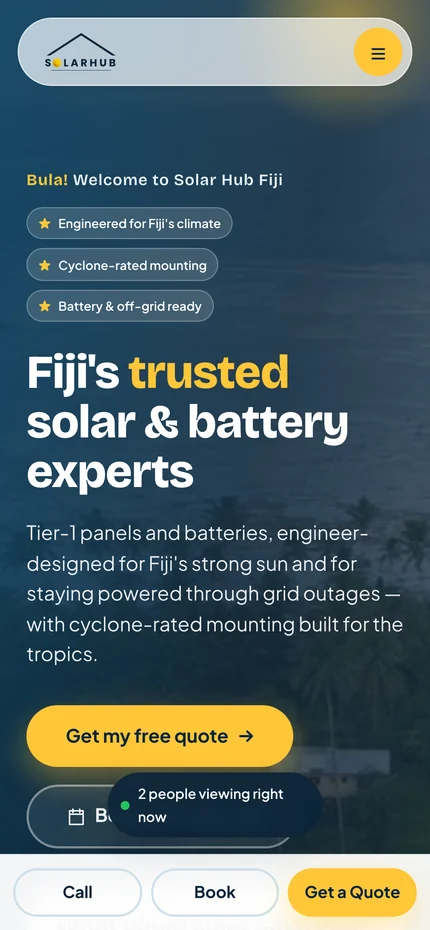
Solar Hub Fiji homepage on mobile
Solar · Fiji · Localised build

Solar Hub Fiji

The brief. Take a proven New Zealand site into a different country without turning it into a copy-paste job with the currency swapped. Fiji is a genuinely different market: different tariff, different weather, different reason to buy.

What we built. The architecture carries over, but the substance is rebuilt for Fiji. The estimator runs in Fijian dollars against EFL tariffs and Fijian regions. The proof points change too — in New Zealand the pitch is savings, in Fiji it is savings and staying powered when the grid drops, with cyclone-rated mounting engineered for the tropics.

  • FJD throughout, with the estimate calculated against local EFL tariffs rather than converted from NZ figures.
  • Fiji-specific engineering claims — cyclone-rated mounting, grid-outage resilience, battery and off-grid readiness.
  • Local-first contact, including the 1566 short code and a Suva address in the top bar.
  • An EV charging section built in as that side of the business came online.

The result is a site that reads as a Fijian company to a Fijian buyer, while sharing enough DNA with the New Zealand build that both can be maintained by the same team.

FJD estimator EFL tariff logic EV charging Localised trust signals Shared design system
Visit solarhubfiji.com
westcott.co.nz
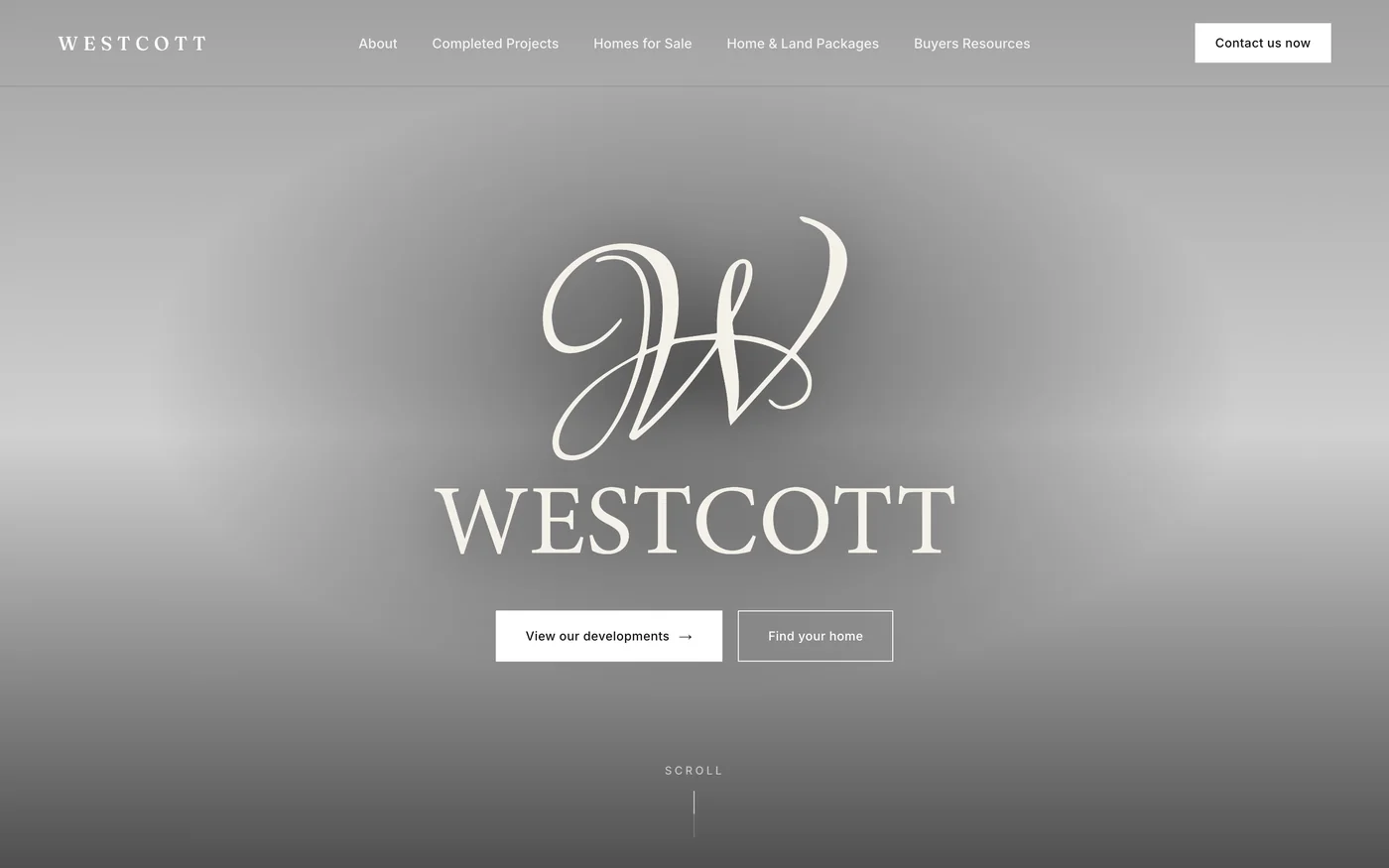
Westcott Developments homepage, showing the monogram over a full-bleed development render
Westcott Developments homepage on mobile
Property development · Auckland · Brand-led build

Westcott Developments

The brief. A residential developer with a substantial Auckland portfolio, selling homes that people commit to off the plan. This is the opposite problem to solar. Nobody buys a house because a slider told them a number. They buy because they believe the developer will actually deliver what the render promises.

What we built. A deliberately restrained, editorial site where the photography and renders do the selling. No stock imagery, no gradient buttons, no urgency banners. The monogram sits over a full-bleed development render, and everything below it is evidence: what has been built, where, and how much of it.

  • A track record that is structural, not a claim. The site is organised around the completed portfolio — homes delivered, developments completed, suburbs covered — because for an off-the-plan buyer that history is the sales argument.
  • A page per development, so each project can be linked, shared and sent to a buyer on its own.
  • A footprint view by suburb, letting a buyer immediately see whether this developer builds where they want to live.
  • Split paths for different buyers — homes available now, home and land packages, and a buyers resource section for people earlier in the process.

The typography and monochrome palette are doing real work here. In a category full of shouty house-and-land marketing, restraint reads as confidence, and confidence is what a buyer is shopping for when the house does not exist yet.

Editorial design system Project detail pages Portfolio architecture Buyer journey splits Render-led art direction

Visit westcott.co.nz See property marketing
proficientcs.com
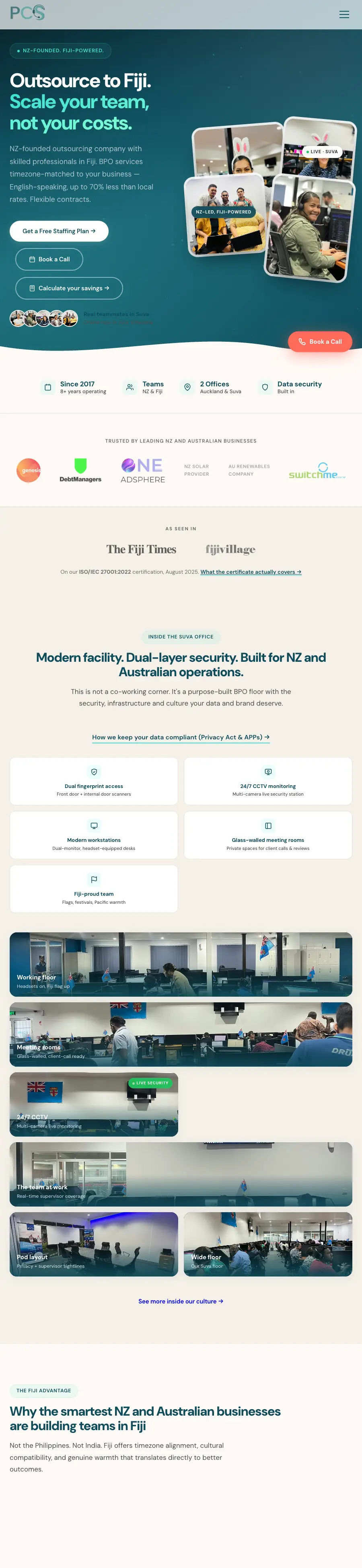
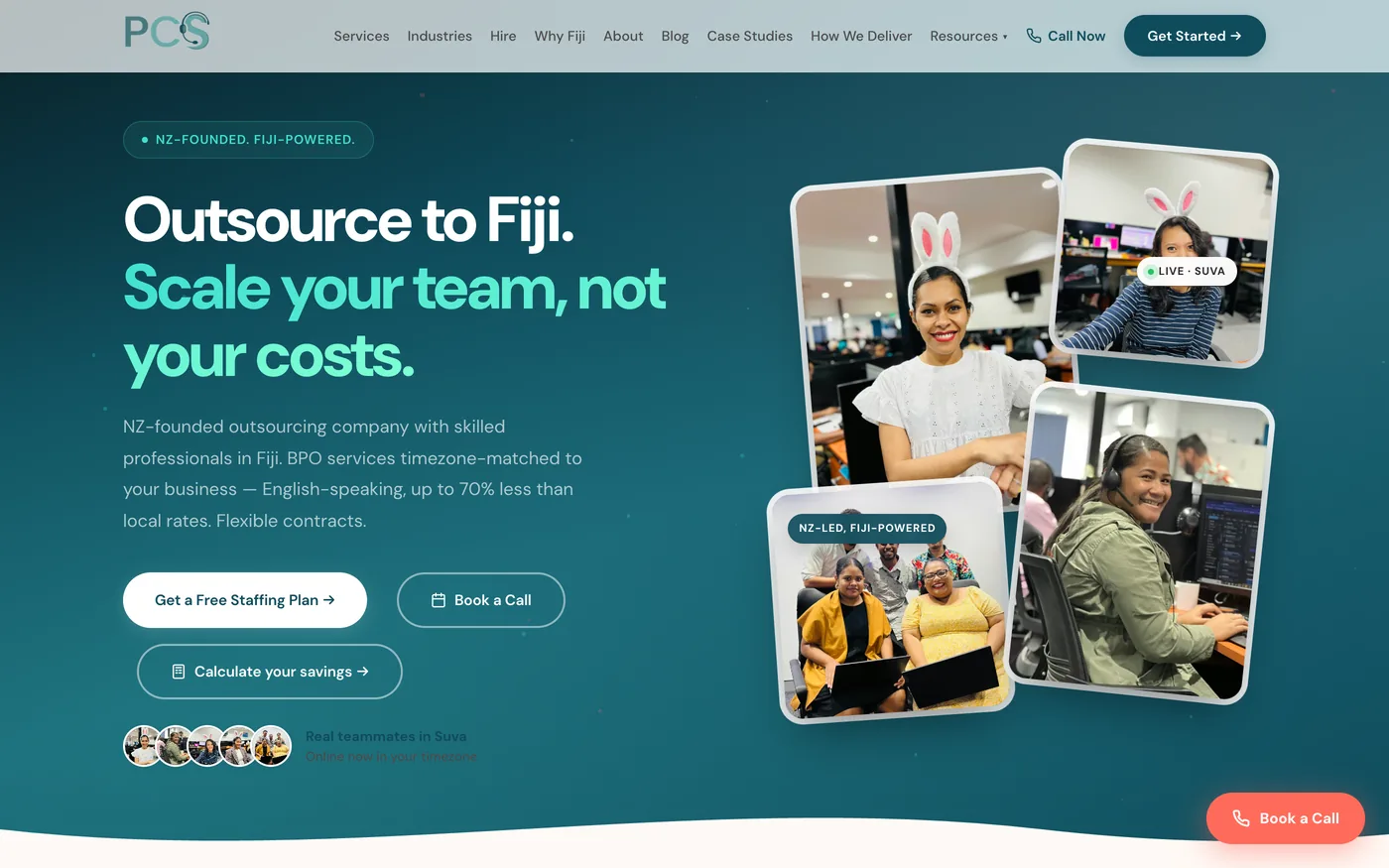
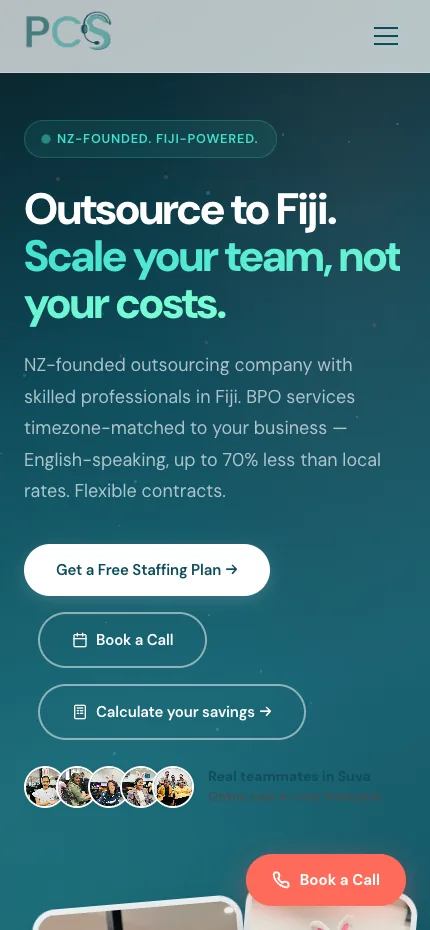
PCS homepage, showing the outsourcing headline and photographs of the Suva team
PCS homepage on mobile
Outsourcing & BPO · NZ and Fiji · Multi-page build

PCS

The brief. Outsourcing has a trust problem. Buyers picture an anonymous room somewhere and worry about who is really answering the phone. A stock-photo website makes that worse, not better.

What we built. The hero leads with photographs of the actual team in Suva — real people, at real desks, some of them wearing bunny ears. That decision does more for credibility than any amount of copy, because it is the exact thing a sceptical buyer wants to verify.

  • A savings calculator so a prospect can size the cost difference themselves before talking to anyone.
  • Two entry points, not one — a free staffing plan for people still scoping, and a direct booking for people ready now.
  • Depth for a considered B2B purchase, across services, industries, how delivery works, case studies and a resource library.
  • Forms wired straight into the CRM, so an enquiry lands in the queue instead of an inbox.

The whole site is arranged around one question a buyer is really asking, which is not "what does this cost" but "can I trust the people who will be doing this work". Everything above the fold answers that.

Savings calculator Real team photography Multi-page architecture CRM-integrated forms SEO structure
Visit proficientcs.com
talentfiji.com
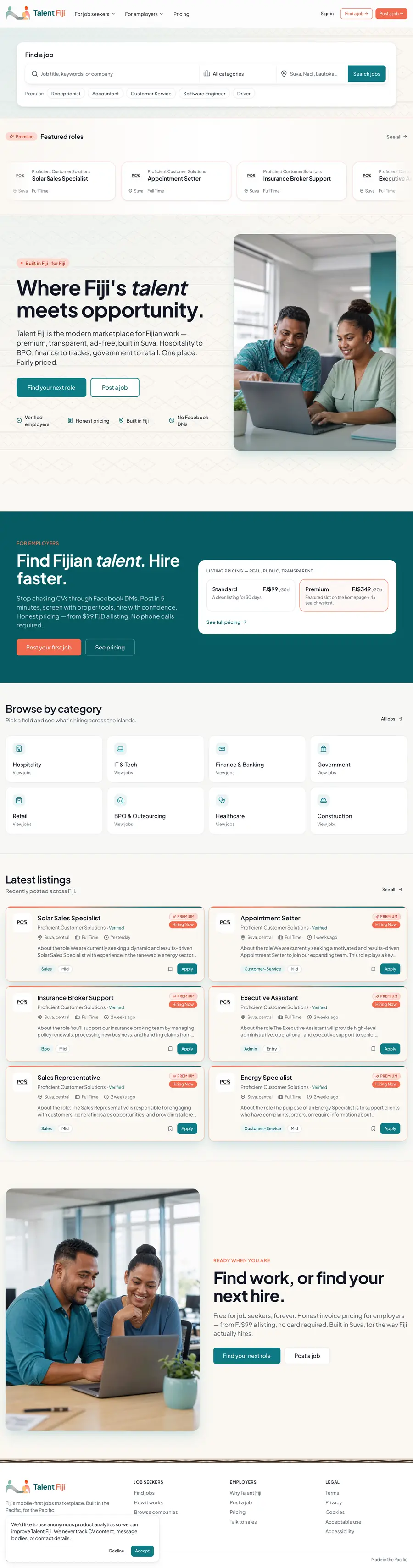
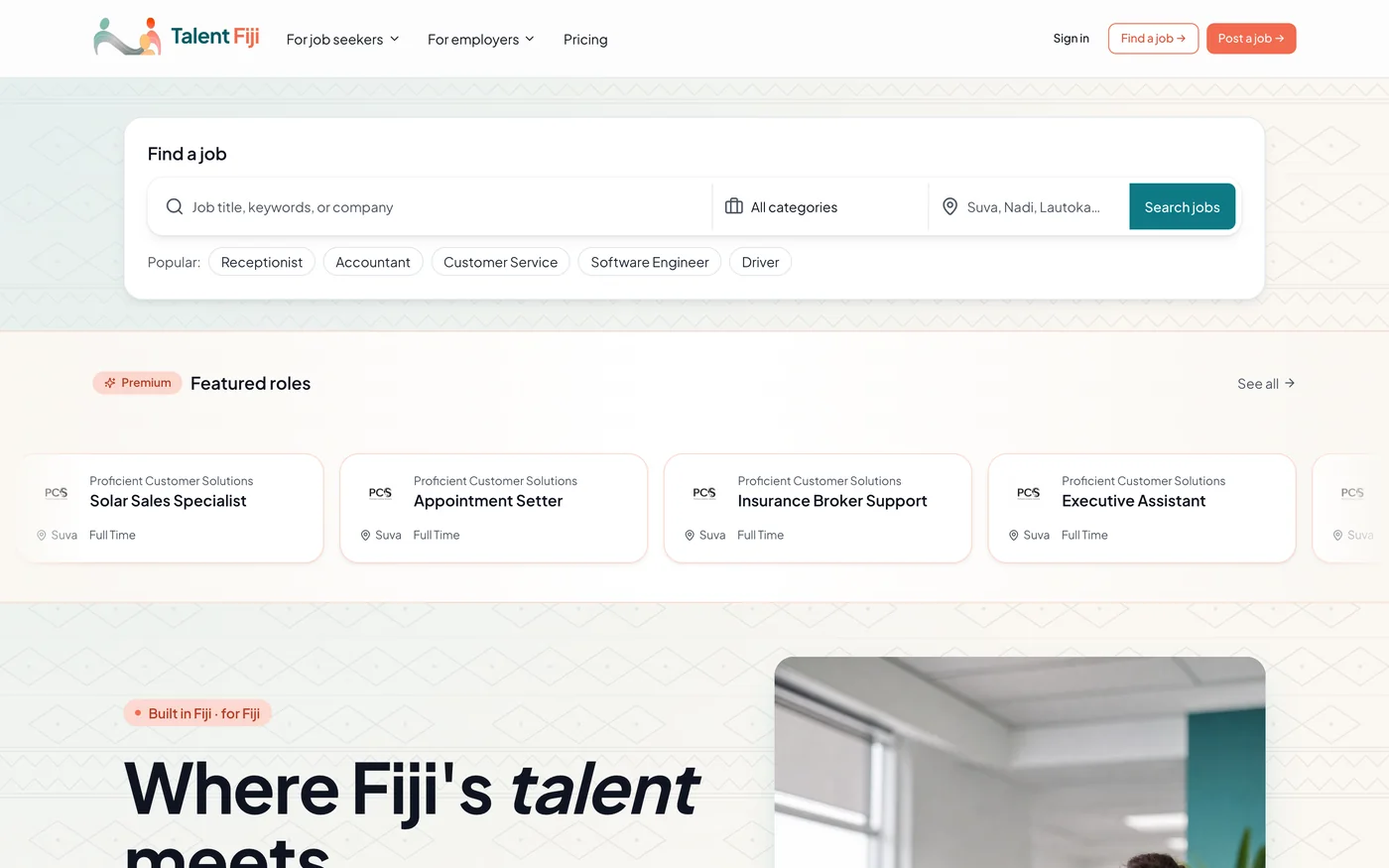
Talent Fiji homepage
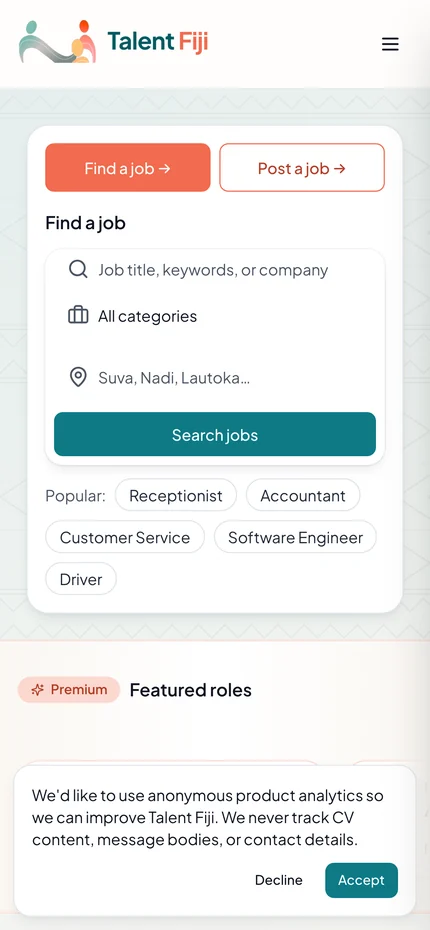
Talent Fiji homepage on mobile
Jobs marketplace · Fiji · Full platform build

Talent Fiji

The brief. Fiji had no serious home-grown jobs board. Employers were recruiting through Facebook groups and word of mouth, and candidates had nowhere central to look. This is not a brochure site, it is a two-sided marketplace that has to work for both.

What we built. A full job platform: employer accounts that post and manage listings, candidate accounts with profiles and applications, search by title, category and location, and a featured-roles tier employers pay for.

  • Two products in one site — separate paths for job seekers and employers, each with its own navigation and pricing.
  • Search that matches how people actually look, by role, category and the towns people commute to rather than abstract regions.
  • A paid featured tier, so the platform earns from employers instead of charging candidates.
  • Built for Fiji — local locations, local categories, and a design that loads on the connections people really have.

The hard part of a marketplace is that it is worthless until both sides show up. The site is structured so employers see candidates and candidates see real roles from the first visit.

Two-sided marketplace Employer accounts Candidate profiles Paid featured listings Search & filtering
Visit talentfiji.com
tradesfiji.com
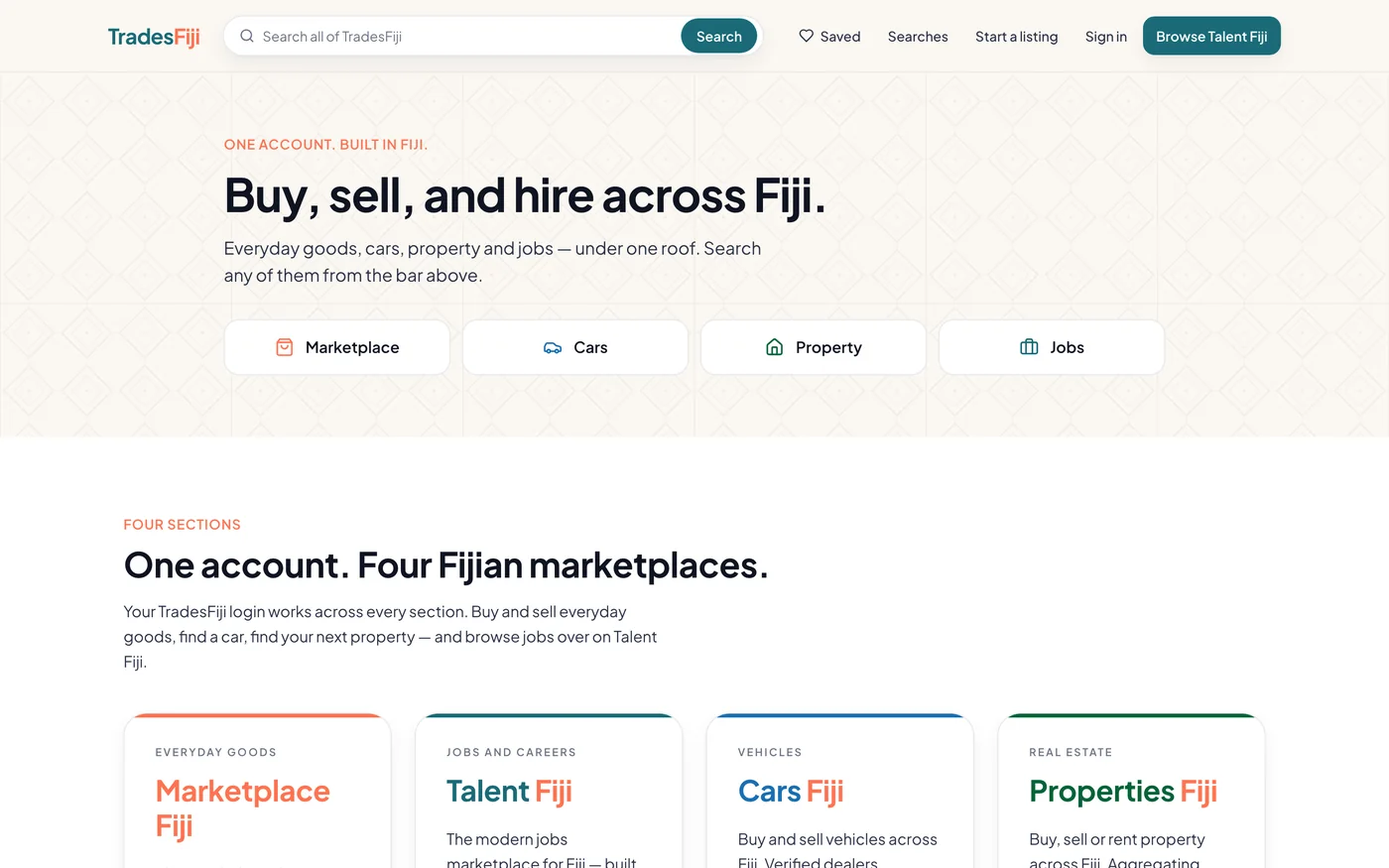
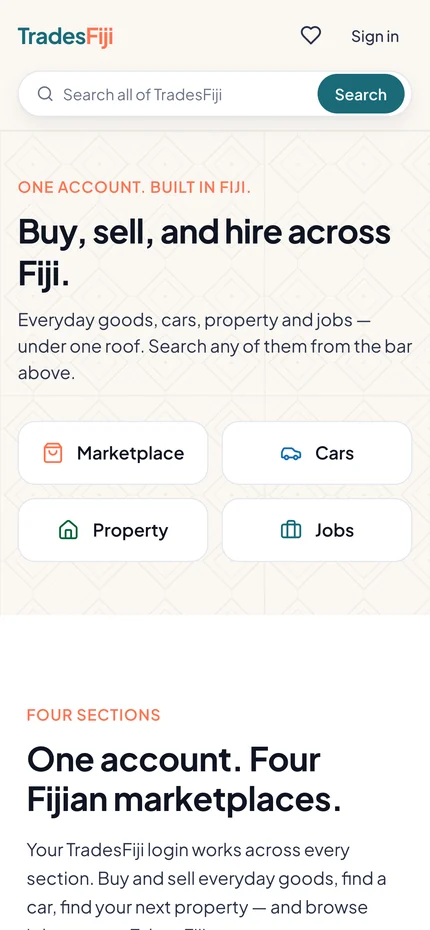
TradesFiji homepage
TradesFiji homepage on mobile
Marketplace · Fiji · Full platform build

TradesFiji

The brief. Finding a plumber, a builder or a second-hand fridge in Fiji meant asking around. The brief was a single place where Fiji buys, sells and hires, which is three different jobs sharing one platform.

What we built. A marketplace covering trades and services alongside classifieds, with listings, categories, search and direct contact between the two sides.

  • Trades and goods in one place, because the same person hiring an electrician this week is selling a couch the next.
  • Category-led browsing for people who do not know exactly what to search for.
  • Direct contact between parties, with the platform getting out of the way once a match is made.
  • Mobile-first throughout — in this market the phone is the only device that matters.

Marketplaces live or die on how quickly someone can list something. That flow got the most attention.

Marketplace Trades & services Classifieds Category browsing Mobile-first
Visit tradesfiji.com
insuresave.co.nz
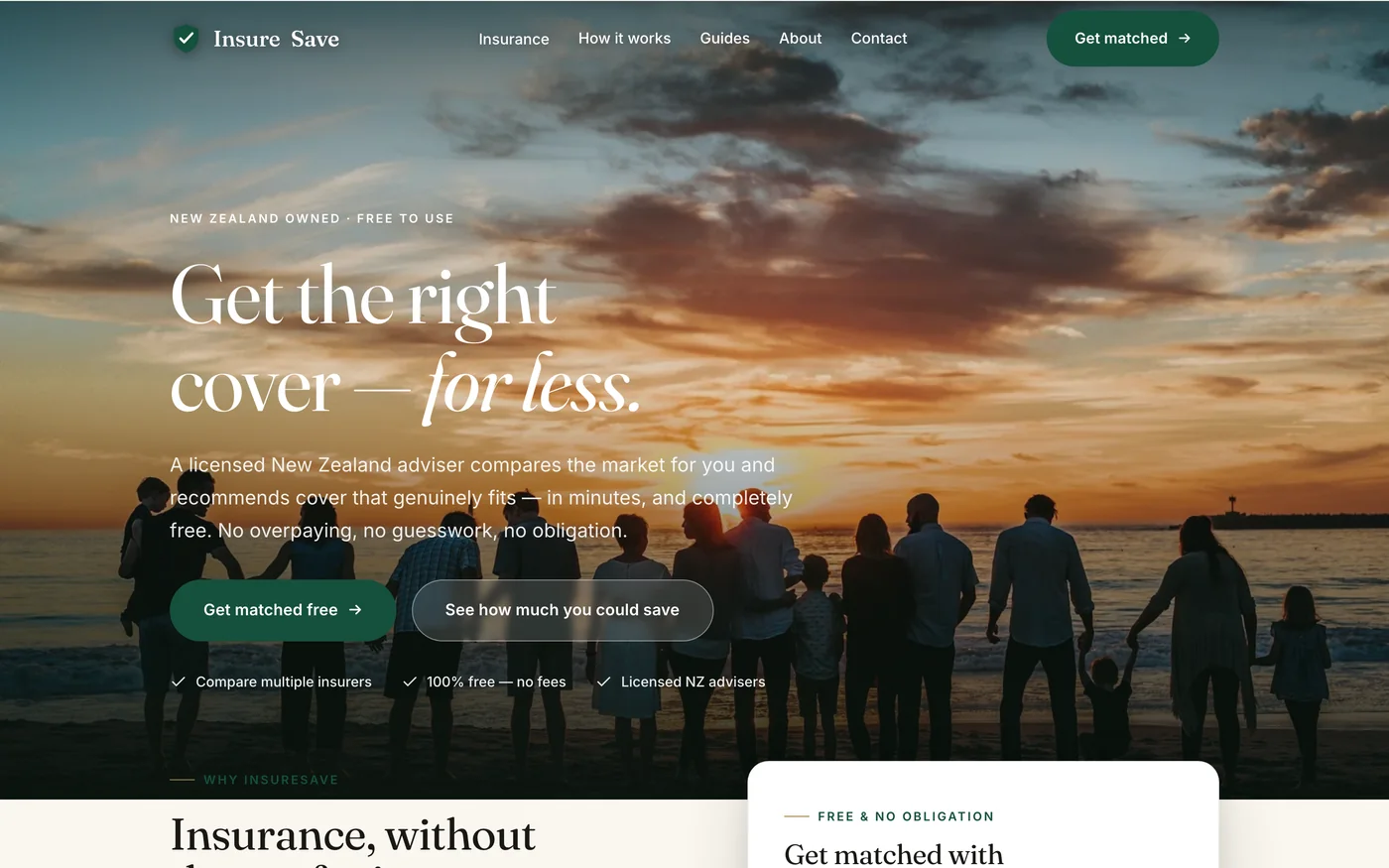
InsureSave homepage
InsureSave homepage on mobile
Insurance · New Zealand · Lead-gen build

InsureSave

The brief. Consumer insurance is sold on trust and comparison, but most comparison sites feel like a form with a logo on it. This one had to feel like help, and it had to feed a live adviser network.

What we built. A comparison and matching site that takes someone from "I should probably sort my insurance" to being matched with a trusted adviser, without pretending to give financial advice along the way.

  • Comparison framing, not a quote form — the page explains the choice before it asks for anything.
  • Matched to a real adviser, with the handover made explicit so nobody is surprised by the call.
  • Compliance-aware copy. No guaranteed savings, no implied advice, no personal-attribute claims — which also keeps the paid campaigns approvable.
  • Wired into the lead engine, so an enquiry is contacted while the person is still thinking about it.

The restraint is the point. In a regulated category the fastest way to lose both the customer and the ad account is to overclaim.

Comparison UX Adviser matching Compliance-aware copy CRM-integrated Campaign landing pages
Visit insuresave.co.nz
Websites

Every one of these was designed, built and deployed by us.

Not a template with a logo dropped in. We write the copy, design the interface, build the calculators, wire the forms into your CRM and ship it. If you want the same thing for your business, tell us what you sell.

How we'd do it for you

The same repeatable model — different scripts, same outcome.

It's one engine: Voice AI, SMS and chatbot trained on your knowledge base, running your signed-off qualifying questions, booking confirmed appointments on your calendar. We swap the script for your vertical — the mechanics that doubled Solar Hub's ratio stay the same.

One simple price

From $95 + GST per confirmed appointment, priced by industry. That's the whole pricing model.

No retainers, no per-lead fees, no lock-in. You pay when a qualified prospect is booked on your calendar — and never for a lead that falls outside your signed-off thresholds. See the full pricing →

Ready for your own results?

Book a strategy call. We'll map your numbers live.

We'll audit your funnel, map the qualifying questions, and show you what the AI Conversion Engine would change before you commit a dollar. From $95 + GST per confirmed appointment, priced by industry.

Book my strategy call Ask our AI